DISC is a popular assessment used by individuals, teams, and organizations worldwide.
The DISC assessment sorts people by four main factors: Dominance, Influence, Steadiness, and Compliance. There are 8 different personality types that can result from this assessment. The DISC assessment is widely used in business to help people work more effectively and efficiently.
Key Takeaways
-
The DISC assessment categorizes personalities into four primary traits: Dominance, Influence, Steadiness, and Compliance.
-
DISC is popular in businesses for improving job performance and team dynamics.
-
While some are concerned about the reliability and validity of DISC, providers like TTI Success Insights design their assessments to be fair, legal, and inclusive.
- Using a DISC assessment from a reliable provider addresses accuracy, reliability, and validity.
Understanding the DISC Assessment
The DISC assessment is widely used in work settings. It helps people understand personality traits and how they communicate with each other.
Theories and Framework
DISC theory looks at how emotions shape our behavior. It focuses on four main traits:
- Dominance measures how someone responds to problems and challenges.
- Influence measures how someone chooses to influence people and contacts.
- Steadiness measures how someone responds to pace and consistency.
- Compliance measures how someone responds to procedures and compliance.
These traits help us better understand ourselves and our work environments.
DISC Communication Types and Uses in Business
In business, DISC assessments help teams work better together and leaders lead more effectively. They are used for:
● Team Building: To help teams work together smoothly.
● Leadership Development: For leaders to improve communication and team management.
● Improving Workplace Dynamics: To create a better work environment and boost productivity.
Even though some question the DISC assessment’s accuracy, it remains a valuable tool for growth in both personal and professional areas.
Is DISC a Reliable Personality Test?
DISC is a reliable behavioral assessment if it comes from a credible assessment provider. DISC assessments aren’t all the same, and their format and questions can differ between assessment providers.
Look for an assessment provider that complies with federal laws and EEOC guidelines to prevent discrimination based on race, gender, age, disability, or other distinctive traits. That compliance makes a DISC assessment safe to use in the workplace.
Conclusion
The DISC assessment is widely used and helps identify an individual’s behavioral style, communication preferences, and more in personal and professional settings.
While DISC is popular for a reason, it doesn’t solve every workplace problem. If you want to expand awareness beyond behavior, take a multi-science approach to get insights into motivation, emotional intelligence, and more.
Those who use the DISC assessment need to know its limits. It’s smart to use other valid assessments along with this one. This way, you get a fuller picture of someone’s personality and behavior.
In short, the DISC assessment can give useful insights into how people behave and communicate. But, it’s important to think critically about its results. Using it alongside other proven methods is the best way to make informed decisions for your business.
This balanced approach shows the value of being careful and informed when using personality assessments. It’s essential in both personal and professional settings.
Need broader assessment solutions for your business? Get started with TTI Success Insightsand gain deeper insights into your workforce.

The DISC assessment is popular in professional settings to understand personality traits. DISC looks at four factors of behavior: Dominance, Influence, Steadiness, and Compliance.
Many people ask, “Can DISC be used for hiring?” Can a behavioral assessment be safely and legally used in the talent acquisition process?
The answer is yes, if you have the right assessment provider. You need to use DISC assessment hiring strategically.
Key Takeaways
- DISC assessment measures scores in four factors: Dominance, Influence, Steadiness, and Compliance.
- DISC was not originally intended as a pre-employment screening tool.
- DISC can be used for hiring, but requires legal compliance and a proper process.
- Many organizations use DISC to predict how well someone will perform on the job, but not all organizations use DISC properly.
Overview of DISC Assessments
DISC assessments help reveal how people behave, communicate, make decisions, and react under pressure. DISC focuses on what you can see, not just what you feel, because DISC is observable. This makes DISC a great resource for understanding how someone behaves in their role at work.
Understanding DISC Basics
Dominance
This behavioral factor measures how someone responds to problems and challenges.
- If your highest score is D, you are a Direct communicator.
- If your lowest score is D, you are a Reflective communicator.
Influence
This behavioral factor measures how someone chooses to influence people and contacts.
- If your highest score is I, you are an Outgoing communicator.
- If your lowest score is I, you are a Reserved communicator.
Steadiness
This behavioral factor measures how someone responds to pace and consistency.
- If your highest score is S, you are a Steady communicator.
- If your lowest score is S, you are a Dynamic communicator.
Compliance
This behavioral factor measures how someone responds to procedures and constraints.
- If your highest score is C, you are a Precise communicator.
- If your lowest score is C, you are a Pioneering communicator.
Learn more about the DISC assessment here.
How DISC Works in Recruitment
Using DISC in hiring makes it easier for employers to pick the right candidate for a role. It lets them choose based on the job’s needs. For example, if a role requires a lot of work with data, a Precise communicator could be a great fit, or if the role requires a lot of networking and face time with people, an Outgoing applicant will naturally excel.
DISC adds to what you learn from interviews. It gives a fuller picture of who’s right for the job.
Can DISC Be Used for Hiring?
It depends on how it’s used. Not all assessment providers are created equal; neither are all DISC assessments.
At TTI, our hiring assessments are designed in accordance with federal employment laws and EEOC guidelines to ensure fairness, equity, and legal compliance. We provide our partners with guidance and training on the proper, fair, and legal use. We adhere to disparate treatment and disparate impact principles to prevent intentional and unintentional discrimination based on protected characteristics such as race, gender, age, or disability.
Learn more about compliance at TTI and assessment use in hiring here.
Advantages of Using DISC in Hiring
- Behavioral Insight: DISC assessments give a deep look into a candidate’s natural and adapted behavioral profile. This helps match a candidate’s behavior with a job.
- Enhanced Team Dynamics: Using DISC in hiring helps teams work better together by helping you understand fit within a team and a role. You can use DISC to find the right person to create compatible coworking teams.
- Streamlined Selection Process: When used properly, DISC can save time in the hiring process by helping you find the right candidate faster.
Conclusion
Using DISC for hiring can help you understand an applicant’s behavior. It gives insights that go beyond what a resume shows. This way, you can find candidates who fit well with your company’s culture.
This can lead to happier employees and lower turnover rates. DISC hiring best practices suggest using these insights alongside other methods, rather than relying solely on the assessment to find the right candidate and ensure a fair hiring process.
By combining DISC insights with cognitive tests and interviews, employers can make better choices. This approach helps create a better work environment for everyone.
Need other assessment solutions for your business?
Get started with TTI Success Insights today for expert employee assessments.

The DISC assessment is incredibly popular for a reason: It brings clarity and insight to behavior in an accessible, actionable way.
The way you take and use the assessment can vary on your assessment provider, but there are best practices for using DISC accurately and effectively.
Key Takeaways:
- You should retake DISC once a year or after a major life event.
- Taking DISC more frequently than that gives you less accurate results.
- Don’t throw out your old DISC profiles; use them to guide future development and compare and contrast.
- 12 Driving Forces® (Motivators) change differently than DISC.
- Major life events including marriage, breakups, new jobs, job loss, moving, global events, birth of children, death of loved ones, and more.
When Should You Retake the DISC Assessment?
One of the most common questions I hear in training is, ‘How often should I retake an assessment?’ closely followed by, ‘How often should my clients retake it?’ The answer really depends on where you’re at and where you want to go.
Here are solid guidelines to help you make an informed decision on when you should retake the DISC assessment.
Why Should You Retake DISC?
DISC isn’t about being a ‘type’ or gaining a label. It’s about increasing awareness of behavior.
Think of it like an annual check-up. Retaking the DISC assessment gives you a pulse on your overall well-being, especially how you are showing up behaviorally in both your personal and professional life. It helps answer questions like:
- Am I operating from my natural baseline of behavior?
- Have there been shifts in how I respond to pressure or change?
- Am I adapting my behavior in healthy ways, or just surviving?
While everyone talks about physical wellness, DISC is a powerful tool for checking in on behavioral wellness. It also gives coaches, leaders, and organizations valuable insight to support people more effectively.
How to Time a DISC Retake?
At TTI Success Insights, our team retakes our assessments annually, which is a great standard. It gives you time to reflect on your results and accurately track changes.
We recommend retaking your assessment every 18–24 months, depending on what is happening in your life.
Here are some general best practices:
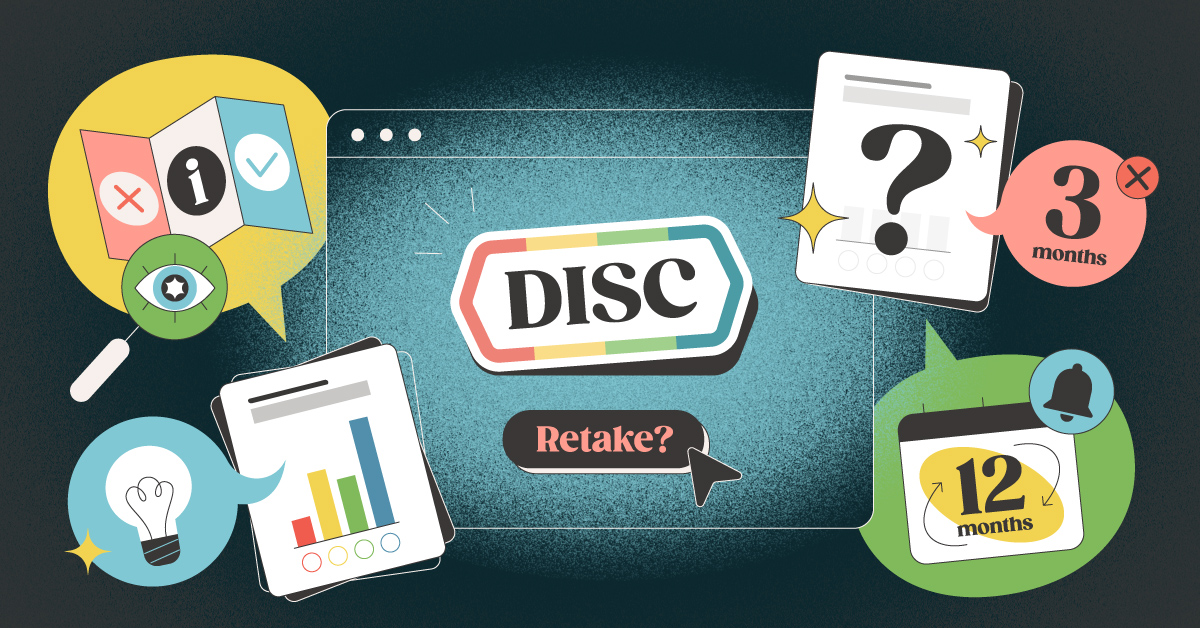
- Do not retake DISC more frequently than every 3 months.
- Retaking DISC once a year is standard.
- Retake DISC after a major life event, even if it hasn’t been a full year.
Life happens. We adapt. Assessments help surface those adaptations.
What Counts as a “Major Event”?
Major events, positive or negative, can significantly impact how we show up behaviorally. These might include:
- Marriage or divorce
- A breakup
- Moving
- Birth of a child
- Death of a loved one
- Starting a new job or role
- A global or external crisis (pandemic, war, economic instability)
Any significant milestone can shift how we respond to the world. DISC helps you understand whether those shifts are temporary adaptations, or something deeper.
Natural Style vs. Adapted Style: Why Changes Matter
At TTI, we measure both Natural and Adapted behavioral styles. Your Natural style tends to stay relatively consistent over time. When I see a significant shift in someone’s Natural graph, it makes me curious to learn more.
I once facilitated a training where a woman’s Natural DISC profile changed dramatically over an 18-month period. In 2022, she was a Reflective communicator with a low D score, making her more patient and reserved. By early 2024, she was a Direct communicator; her Dominance score increased by more than 80 points!
I asked if she was willing to share what had changed in her life.
She told us she had been diagnosed with cancer in late 2023.
Suddenly, decisions had to be made quickly. Waiting was not an option. She needed to act, advocate for herself, and move forward without hesitation. Her behavior shifted because her life demanded it.
What was powerful is that she recognized the change, understood it, and honored where she was in that season. DISC gave her language and awareness, not judgment.
Your Adapted Style will naturally fluctuate, especially under pressure. What matters is noticing why those shifts are happening and approaching them with curiosity.
Remember, behavior is changeable! If you have a low Compliance score, but your position requires a lot of data analysis, you can study the behavioral patterns of a Precise communicator and implement them after time.
What About Driving Forces/Motivators?
Unlike DISC, Driving Forces (Motivators) are expected to change over time, on average, about seven times throughout your life.
Think about it:
- As children, we often adopt our parents’ values.
- As teenagers, we rebel and explore the opposite.
- Then comes college, first jobs, relationships, children, career changes, retirement…
Life evolves, and so do our values.
When I took my first assessment in 2008, my Driving Forces were Resourceful, Instinctive, Commanding, and Objective. Everything was mainstream, except Instinctive, which was Passionate.
Today, my profile is Harmonious, Instinctive, Intentional, and Commanding. I am a 100 in Harmonious, and my Objective score is 0, yet it was a Primary Driving Force for me 18 years ago.
That shift makes me pause and reflect on how much has changed in my life. And honestly, I feel more balanced and grounded today. But who knows where I will be in another 18 years, that is the beauty of growth.
What Should You Do with Old DISC Assessments?
Don’t throw your old assessments away! Use them!
As a coach or leader, comparing a client’s previous report to their current one can unlock powerful insights. TTI’s Comparison Reports (now FREE) allow you to see:
- What stayed consistent
- What shifted
- Where adaptation may be happening
- Where support or conversation is needed
This applies not only to DISC and Driving Forces, but also to other TTI assessments like EQ, DNA, and Acumen. Each retake adds context, depth, and understanding.
Conclusion
Retaking assessments is not about changing who you are, it is about understanding where you are.
For you, your clients, and your well-being.
Assessments give us permission to pause, reflect, and ask better questions. And sometimes, that awareness alone makes all the difference.
Want to experience DISC for yourself? TTI is here to help.

Today’s workforce is more generationally diverse than ever before. The World Economic Forum reports that, “for the first time in history, five generations—each with unique technological and formative experiences—are currently working side-by-side. But the age spread of today’s workforce has never been wider, while the experiences characterizing each generation have never been so different.”
Supporting a multi-generational workplace can get complicated, especially if leaders want to support the unique needs of younger generations. Millennials and Gen Z deserve a dedicated plan contributing to their success.
That’s where a motivational behavioral approach comes in.
Key Takeaways:
- Outdated assumptions undermine engagement. Labeling younger workers as entitled or disengaged creates friction before trust has a chance to form.
- Feedback works best when it matches an individual’s communication style. Younger workers value frequent feedback, but effectiveness depends on their DISC style and your delivery.
- Development drives engagement and retention. Millennials and Gen Z prioritize meaningful growth and purpose. Development plans tied to individual motivations and work styles, not just job tasks, create lasting engagement and reduce turnover.
- Motivation isn’t generational. It’s behavioral. Millennials and Gen Z aren’t motivated by their age group, but by their individual behavioral styles, communication needs, and personal drivers.
What People Get Wrong About Motivating Younger Workers
Millennials are ages 29 to 43, comprised of people born between 1981 and 1995, and Gen Z are ages 12 to 28, comprised of people born between 1997 and 2012.
Unfortunately, these demographics are burdened by many stereotypical assumptions, and those perceptions can damage working relationships before they have a chance to thrive. Older workers and managers might assume that Millennials and Gen Z are entitled, disengaged, or job hoppers.
That’s because these demographic groups have different priorities and needs from previous generations of workers. Leaders will find the most success by taking a behavioral science perspective, one where motivation at work is driven by an individual’s needs, communication style, and passions, not their birth year.
Get to Know the Individual
Your first step to motivating Millennials and Gen Z? Get to know individuals with no assumptions. The best way to do this is to use a standardized assessment tool built to increase understanding.
TTI’s Talent Insights assessment measures both behavior and motivation through a combination of DISC and the 12 Driving Forces. When you understand how and why someone behaves, it improves communication, engagement, and retention. Younger workers want to feel seen, and the right tool can help you do that.
Increase Communication (In the Right Way)
Once you understand an individual’s communication style, you can build better relationships. In general, Millennials and Gen Z are 73% more likely to want frequent feedback than their older peers. They’re looking for recognition and coaching to develop their skills, but that feedback will be most effective when delivered in accordance with your employees’ communication style.
Let’s look at both sides of Steadiness in DISC for an example. If your employee is a Steady communicator, they prefer defined responsibilities and clearly outlined expectations. Delivering feedback with actionable insights and direction on how to move forward will help them feel secure and engaged in their work. If you take the same approach with a Dynamic communicator, you’ll lose their focus immediately. Instead, deliver Dynamic feedback quickly and informally, allowing them to express themselves and bounce ideas back at you.
When your entire team understands each other’s communication styles, it creates a shared language within your team. Leaders can deliver the feedback their employees need exactly how they need to hear it.
Get Hyper-Specific in Development
“As Gen Zs and Millennials navigate a rapidly changing world of work, they are reevaluating the capabilities they need to succeed and the support they want from their employers,” said Elizabeth Faber, Global Chief People & Purpose Officer at Deloitte.
This means that leaders need to re-evaluate how they develop their teams. That same study from Deloitte reveals that many younger workers are worried about their professional futures with the rise of AI, and are relying on skills development to stay current and employable in a shifting marketplace.
Dig into what motivates your Millennial and Gen Z workers and find a way to integrate their passions into their development. You’ll create work that matters, which is a top priority for younger workers; SHRM shared that “86% of Gen Z and 89% of Millennials report that having a sense of purpose is very or somewhat important to their overall job satisfaction.”
When you can harness the power of motivation, you create an environment that fosters development and improves retention. Create development plans tied to how people work, not just what they do.
Conclusion
Motivating Millennials and Gen Z isn’t about special treatment or generational perks; it’s about understanding people as individuals. When leaders move beyond stereotypes and apply a behavioral lens, motivation becomes clearer, communication becomes more effective, and development becomes more meaningful.
The future of motivation isn’t generational—it’s behavioral. When leaders invest in understanding how people work and what drives them, they’re investing in the future success of their teams and their businesses.
Want to harness the power of Talent Insights for your team? Let’s make it happen.

Ever thought about what makes successful CEOs tick? It’s easy to think that a Direct DISC style is common among them. This is because Direct communicators are known for being decisive and assertive, but the truth is more complex.
Do you think only one type of leader is at the top, or can different styles lead the way? Experts say it’s not just one type. They believe that successful CEOs can be any DISC type.
The secret to great leadership is using the strengths of each DISC style. This way, different CEOs can lead in their own unique way. The question, “What DISC type are most CEOs?” is more complex than it seems.
Key Takeaways
- Leadership effectiveness in CEOs isn’t confined to a single DISC type.
- The Direct (High D) style is often assumed but not exclusive.
- Successful leadership can be exhibited through different DISC styles.
- Using the unique strengths of each DISC type enhances leadership capability.
- Organizational needs and personal methods influence leadership styles.
Introduction to DISC Personality Types
The DISC personality types give us deep insights into human behavior, which is key in leadership. It breaks down behavior into four main factors: Dominance (D), Influence (I), Steadiness (S), and Compliance (C). Knowing these styles through a CEO personality test or a disc behavior assessment can really help teams work better and leaders lead more effectively.
Understanding the Four Major DISC Styles
DISC profiles for CEOs show important leadership traits by looking at how they fit into the four main DISC styles:
- Direct Leaders (High D): Emphasize assertiveness, control, and problem-solving.
- Reflective Leaders (Low D): Value team-building, strong relationships, and a personal approach.
- Outgoing Leaders (High I): Focus on communication, enthusiasm, and relationship-building.
- Reserved Leaders (Low I): Prioritize data over interpersonal relationships, taking a low-key approach to socializing.
- Steady Leaders (High S): Highlight patience, reliability, and team unity.
- Dynamic Leaders (Low S): Enjoy fast-paced projects and lively, intense discussion.
- Precise Leaders (High C): Prioritize accuracy, structure, and analytical thinking.
- Pioneering Leaders (Low C): Harness big picture thinking and a visionary approach over embracing process and details.
Each style has its own strengths and challenges. This makes the disc behavior assessment a great tool for growing personally and professionally, especially for executives.
The Role of DISC Assessments in Leadership
Using DISC assessments in leadership development can make an organization more effective. By understanding DISC profiles for CEOs, companies can choose the right leaders, build the right teams, and solve conflicts more efficiently. This approach creates a productive work environment and ensures leaders align with the company’s goals, resulting in effective management across all situations.
Why Direct Personalities Often Surface Among CEOs
The Direct behavioral style is common among CEOs. It’s known for decisiveness, assertiveness, and confidence. These traits are perfect for high-pressure situations that require quick decisions.
This section will look at the Direct communicator’s key traits.
Traits Associated with Direct (High D) Behavioral Style
The Direct style in DISC personality types has some key features:
- Decisiveness: Direct people make decisions fast, with a sense of urgency.
- Directness: They communicate clearly and without beating around the bush.
- Confidence: They are very self-assured and lead with authority.
- Results-Driven: Direct communicators focus hard on reaching goals and objectives.
Other DISC Types That Make Great CEOs
While the Direct behavioral type is often linked to top leadership, other DISC types also shine in CEO roles. A DISC behavior assessment helps find these traits. It shows how different DISC types can lead well.
Reflective Communicator: The Thoughtful Leader
Reflective leaders are deliberate and introspective in their communication. They take time to think things through, offering measured insights rather than quick reactions. This creates space for careful decision-making and encourages depth, clarity, and intentional progress.
Outgoing Communicator: The Charismatic Leader
Outgoing leaders are full of energy and great at communicating. They use their positive attitudes to drive their teams and engage across an organizational level. This makes the workplace exciting and motivates everyone.
Reserved Communicator: The Focused Leader
Reserved leaders communicate with purpose and restraint. They may not seek the spotlight, but their words carry weight and meaning. This thoughtful approach helps teams stay focused, reduces unnecessary noise, and builds trust through consistency and authenticity.
Steady Communicator: The Supportive Leader
Steady leaders focus on a calm and united team. This approach fosters teamwork and sustained success over time.
Dynamic Communicator: The Adaptive Leader
Dynamic leaders thrive in change and momentum. They communicate in ways that keep things moving, embracing flexibility and responsiveness.
Precise Communicator: The Methodical Leader
Precise leaders are all about being detailed and careful. They make data-driven decisions, which help with planning and keeping things running smoothly.
Pioneering Communicator: The Innovative Leader
Pioneering leaders are bold, big-picture communicators. They prioritize ideas and possibilities over rules and details, encouraging experimentation and forward thinking. This approach sparks innovation and helps teams break new ground and explore what’s next.
Conclusion
Understanding DISC personality types gives us a deep look into the different leadership styles of successful CEOs. Each DISC style brings unique strengths, and these strengths help organizations grow in special ways.
Using a CEO personality test can show these strengths. It helps people work on their leadership skills.
Leaders can face challenges and grab opportunities by matching their DISC profile. The Direct style is bold and focused on results. The Outgoing style wins with charm and teamwork. The Steady style is reliable and supportive, while the Precise style is detailed and careful.
Using DISC profiles in professional growth helps identify and improve leadership qualities. This approach makes leaders better. It helps organizations grow and adapt.
Explore our assessment solutions at TTI Success Insights today and get started.

The DISC personality assessment sheds light on the many personalities around us. It helps us understand the 8 DISC personality types and how they shape our actions, especially in the workplace.
The DISC model breaks down into Dominance, Influence, Steadiness, and Compliance. Each letter in DISC stands for a behavioral factor that encompasses personality traits. Each factor has a range of key characteristics of DISC personalities. This range creates 8 unique DISC personality styles.
Knowing these styles is not just for entertainment; it’s useful in many ways, personally and professionally. It helps improve how we talk to each other, work together, and connect on a deeper level. The DISC personality assessment can change how we interact with others.
Key Takeaways
- The DISC model categorizes personalities into Dominance, Influence, Steadiness, and Compliance.
- There are 8 DISC personality types, which offer nuanced insights into human behavior.
- Understanding DISC personality styles can improve communication and teamwork in various settings.
- The DISC personality assessment is widely used in both personal and professional development.
- Recognizing the key characteristics of DISC personalities helps improve relational dynamics.
Introduction to the DISC Model
The DISC model is key to personal growth and leadership. This model looks at how people see themselves and their world. TTI Success Insights has expanded the model, making DISC profiles more useful tools to understanding people.
At work, the DISC model helps build strong teams and better communication. It guides leaders in making smart decisions. It’s also useful in personal relationships, helping people get along better and resolve conflicts.
It’s important to remember that DISC profiles can change over time. People can move along the behavior continuum based on their life experiences. Knowing about DISC profiles helps both individuals and groups work better together.
It’s also essential to view your DISC profile holistically. You’re not just your primary style; you’re a combination of your high and low scores, through every factor. A DISC assessment that claims you’re solely one thing is reductive and does not give you the most out of the tool. People are more complicated than just being a “type,” and your behavior matters in every factor of DISC, for every facet of your life.
Understanding the 8 DISC Personality Types
TTI’s DISC model breaks down personality into eight types, each with its own way of acting and interacting. Using the DISC personality assessment tool helps us see these differences. Knowing what are the 8 DISC personality types helps us understand team dynamics better.
These types fall into four main groups: Dominance (D), Influence (I), Steadiness (S), and Compliance (C). Let’s look at the eight types:
- Dominance: This behavioral factor measures how someone responds to problems and challenges.
- If your highest score is D, you are a Direct communicator.
- If your lowest score is D, you are a Reflective communicator.
- Influence: This behavioral factor measures how someone chooses to influence people and contacts.
- If your highest score is I, you are an Outgoing communicator.
- If your lowest score is I, you are a Reserved communicator.
- Steadiness: This behavioral factor measures how someone responds to pace and consistency.
- If your highest score is S, you are a Steady communicator.
- If your lowest score is S, you are a Dynamic communicator.
- Compliance: This behavioral factor measures how someone responds to procedures and compliance.
- If your highest score is C, you are a Precise communicator.
- If your lowest score is C, you are a Pioneering communicator.
Knowing the key characteristics of DISC personalities helps improve teamwork and personal growth. Each type has its own strengths and weaknesses:
- Direct communicators (High D) are bold and straightforward. These stereotypical leaders might become demanding under stress.
- Reflective communicators (Low D) are supportive and team-focused. They might avoid conflict, but will invest in their team’s success.
- Outgoing communicators (High I) are chatty, great speakers, persuasive, and motivated by interpersonal connections. They can be scattered or appear insincere under pressure.
- Reserved communicators (Low I) are focused, interested in data, and less social than their peers. They can appear standoffish under pressure and are driven by results.
- Steady communicators (High S) are group-oriented, focused on developing routines, and value a peaceful working environment. They can be hesitant or passive-aggressive under pressure, but always care about their teams.
- Dynamic communicators (Low D) are fast-moving, bold in their approach, forward-thinking, and interested in engaging across different aspects of work. They can be unreliable or unfocused under pressure.
- Precise communicators (High C) are meticulous, data-driven, detail-oriented, and great at the data side of project management. They can become stubborn and inflexible under pressure.
- Pioneering communicators (Low C) are visionaries, big-picture thinkers, and dreamers. They can be very inspiring, but might not value processes in their pursuit of excellence, coming across as disorganized.
The DISC personality assessment tool helps us understand and grow these traits. It improves how we communicate and work together. Recognizing the flexibility in DISC helps us connect and grow authentically.
Conclusion
Understanding the 8 DISC personality types is key for personal and professional growth. It helps us see our strengths, how we communicate, and our behaviors. This knowledge makes our work and personal lives better.
The DISC model gives us tools for better communication and teamwork. These are vital for reaching our goals and improving how we work together.
Using the DISC personality assessment boosts self-awareness and empathy. This leads to a culture of respect and cooperation. It makes decision-making, solving conflicts, and overall happiness better in any group.
In short, TTI’s DISC model is a great tool for growth. It helps us find new ways to communicate and work together. This makes our workplaces better and more supportive.
Explore our assessment solutions at TTI Success Insights today and get started.

The DISC workplace assessment is a tool used in businesses to understand how people behave. It breaks behavior down into four factors: Dominance (D), Influence (I), Steadiness (S), and Compliance (C).
This assessment helps see how people work with others and how they prefer to work. It also shows how they fit into teams. But some question if it really works and if it can predict how well someone will perform in a job.
Key Takeaways
- The DISC workplace assessment categorizes behaviors into Dominance, Influence, Steadiness, and Compliance.
- DISC assessment tools are widely used in business settings for their insights into interpersonal interactions and team dynamics.
- If you use DISC for job performance review, you need to make sure your DISC provider is legally compliant and scientifically valid.
- Understanding the importance of DISC assessment can help improve workplace communication and efficiency.
Does DISC Really Work?
The DISC assessment does really work, with the right coaching. But, not all DISC assessments are created equally; some DISC tests aren’t scientifically validated and can’t back up results with concrete data. That’s why choosing a high-quality assessment provider is so important. It means you’ll get an accurate, fair assessment that can safely be used for hiring and development in the workplace.
Applications of DISC in the Workplace
Understanding the benefits of a DISC assessment can transform how teams work together. It’s a great tool for improving how we talk to each other and solve problems. Understanding DISC profiles helps teams communicate in ways that work best for everyone and get their point across clearly.
Another key use of DISC is to build teams the right way, making teams happier and more productive. Leaders can use DISC to get better results from their teams, planning development that fits their team’s styles, making the workplace better for everyone.
DISC assessments also help people grow personally and professionally. They help people learn more about how they act and communicate, letting them leverage their strengths and engage more deeply with their work.
Conclusion
The DISC workplace assessment is a key tool for understanding team behaviors. It sorts people into four types: Dominance, Influence, Steadiness, and Compliance. This helps teams work better together.
Using the DISC assessment brings many benefits. It helps teams communicate better and reduces conflicts. It also makes teams work together more smoothly. Plus, it helps match jobs with what people do best, making everyone happier and more productive.
In short, knowing about DISC assessments can really help a company succeed. It lets businesses understand their employees better. This leads to a workplace where everyone grows and works well together.
Need other assessment solutions for your business? Get started with TTI Success Insights today for expert employee assessments.

Remote and hybrid work have redefined how teams connect, but connection hasn’t become less important; it’s become more intentional. Without hallway conversations, shared lunches, or spontaneous check-ins, remote teams face unique challenges in building trust, alignment, and belonging.
The good news? With the right rituals, tools, and human-centered practices, leaders can create meaningful connection across distance. Here are creative, practical ways to help remote and hybrid workers feel seen, supported, and truly part of the team, no matter where they work.
Key Takeaways: Creative Ways to Connect Remote and Hybrid Workers
- Make sure to schedule consistent check-ins, shared routines, and meeting openings to help remote employees feel anchored and included.
- Create shared digital spaces and open collaboration channels to close the connection gap between remote and in-person workers.
- Making space for social connection and clear norms (like camera use) improves communication and trust.
- Focus on fully remote-friendly team building to improve skills while strengthening relationships.
- Knowledge sharing builds resilience. Cross-training, lunch-and-learns, and show-and-tell sessions deepen trust and future-proof teams.
Start with Rituals That Build Consistency
Creating a shared routine builds a strong cadence that your team, remote and in-person, can rely on. Do this through daily or weekly team huddles, with time to report and connect casually built in.
Opening rituals for these meetings can help establish trust and consistency. Ask for recent wins, gratitude rounds, or personal check-ins to start off calls right.
The key here is to help everyone feel connected and engaged with each other, regardless of where they’re located. Being a remote employee can be isolating, so creating reliable communication rhythms will keep people anchored. Build these rituals around what motivates your team and watch it transform basic interactions into long-term meaning.
Use Technology to Create Shared Spaces
One of the biggest hurdles for remote workers is having the kind of access to connection that their in-person peers already have. When you’re in the office together, you can pop in the doorway and ask a quick question without the friction of getting hold of someone.
Close this connection gap with technology. Utilize collaboration channels on your chat tool that are open for questions and concerns, and make sure all team members use them, not just the remote workers.
You can also create virtual lounges or coworking rooms to enable easier communication. Having a voice chat open where people can hop in and problem-solve together makes connection easy.
Make Meetings More Human
Instead of just getting through calls, make them something your team looks forward to. Build in time for socializing at the beginning or end, and rotate facilitators to spotlight each other.
Use your cameras intentionally! Depending on your team culture, the expectations can be varied for camera use, but eye contact and facial expressions are valuable information during conversations.
Come up with a camera use policy everyone agrees on. You can use cameras intentionally—on when connecting, optional when working.
Invest in Hybrid-Friendly Team-Building
Team building doesn’t have to be in person! Embrace remote-friendly workshops and games, like a virtual healthy cooking demonstration, collaborative games, virtual trivia, or online escape rooms.
Virtual events don’t have to feel like afterthoughts! They can be exciting and engaging for your entire team—you just have to know what they’re interested in and adjust accordingly.
These activities also help develop communication skills, problem-solving as a group, and collaboration under the pressure a competition offers (which means low-stakes practice for real-time challenges).
Encourage Knowledge Sharing
Knowledge sharing not only strengthens your team’s relationships, it also enhances your talent pipeline and promotes upskilling within your organization.
Having multiple people who understand how to complete tasks makes the entire team more resilient and it also builds trust; if an employee is cross-trained and can cover their team member during an emergency, their relationship will strengthen.
Encourage your team to conduct lunch and learns where someone teaches a skill, or hold show-and-learn sessions where people quickly demonstrate tasks to help each other work through the day better.
Support Employee Well-Being and Belonging
Mental and physical wellbeing are crucial for your remote or hybrid team. Many people think that remote workers have it easier than their colleagues in-person, but research shows that 28% of remote workers report higher levels of burnout in comparison to their colleagues working in traditional office settings, and 86% of remote workers are experiencing burnout.
Support your entire team’s well-being with scheduled breaks, remote workshops for meditation and stretching, and encouragement to connect over wellness.
Create clear norms around communication and boundary-setting, and follow them with all team members in the same way. Again, consistency is the key to success.
Conclusion
Connection doesn’t happen by accident on any team, no matter if they’re remote, hybrid, or in-person.
By creating rituals on the team, strategically using technology, making meetings meaningful, and supporting knowledge sharing and wellness, your organization can create a team that can endure whatever the market through at you.
Want to find out what really motivates your team? We’ve got the tools to help.

Finding ways to build trust in the workplace is more important than ever, but many leaders don’t know how to build it with their teams. Forbes reported a disconnect between executives’ and employees’ understanding of trust in the workplace. 86% of executives reported a high level of trust in employees, but only 60% of employees reported feeling trusted by their employers.
Correcting that disconnect has to come from the top. “As a leader, you are always on stage,” said Rachel Wolfe, Partner and Chief Integration Officer at The Miracle Manager. “What you tolerate, reinforce, or avoid communicates your values far more clearly than what you say.”
Here’s how leaders can build trust in the workplace.
Key Takeaways
- Trust is crucial for organizational success, but many leaders don’t fully understand how their employees actually feel.
- Leaders can build trust in the workplace through consistency, clear expectations, follow-through, and responsibility.
- Actively demonstrating company values over time is a great way to build trust.
- Leaders should ask for feedback from their teams and implement it to create connection.
- Investing in employee development increases retention and organizational trust.
Why is Trust Important in the Workplace?
Trust is important in the workplace because it creates a foundation of safety for workers. It improves retention, increases engagement and productivity, and creates a company culture that supports and sustains employees and leaders.
How Can Leaders Build Trust on Teams?
Demonstrate Values as Leaders
When it comes to building trust, leaders need to actively focus on their own development. Like all company values, trust needs to come from the top down.
“Many leaders believe trust is built through intention, positivity, or staying ‘connected’, but in reality, trust is built through consistency: clear expectations, follow-through, and the willingness to take responsibility when things don’t go as planned,” Wolfe shared.
Leaders can create that consistency through follow-through and expectation setting. Leaders commonly have more direct behavioral styles, focusing on the big picture, quick communication, and getting results. This approach can alienate your team and direct reports with slower, more intentional behavioral styles.
“One of the most common trust breakdowns I see comes from well-meaning leaders who rely on informal check-ins instead of clarity,” explained Wolfe. “The ‘You good?’ conversation can feel supportive, but without structure, it often masks confusion, disengagement, or misalignment. When expectations are implied rather than stated, leaders may feel reassured while team members quietly struggle or disengage.”
Be overly clear in your expectations and directions! Utilize company-wide briefs, document your vision, and follow up with intention. Take time to listen to employees’ pain points and put your energy towards solving them. Demonstrate care through intentionality, and trust will follow.
Ask for Feedback—and Take It
Another great way to build meaningful trust in your organization is to ask for feedback and then actively implement the suggestions you receive.
“Trust erodes not because leaders don’t care, but because systems don’t support honest ownership,” said Wolfe. “Structure doesn’t limit trust—it enables it. Clear expectations and ownership give people the confidence to take responsibility and the safety to ask for help.”
It can take a while to open up real communication, so in the meantime, facilitate feedback through tools like an eNPS (employee net promoter score) survey, to “help you get a baseline understanding of where exactly your employees are at when it comes to reacting to culture and their own engagement.”
You can also implement skip-level meetings, which encourage entry-level team members to connect with executives by removing the buffer of their managers. These conversations can be more informal, coffee chat-style conversations where you get to know each other, or they can take a mentoring approach where you share general industry knowledge and answer questions.
Getting directly involved in your team’s day-to-day work and demonstrating your willingness to adjust based on their feedback will go a long way toward building trust.
Invest in the Team
Leaders can also create trust in their teams by investing in their development. When executives demonstrate that they care about the advancement of their teams and dedicate resources to that, it demonstrates that the leaders value and support their workers beyond their value to the organization.
That translates to the kind of trust that builds retention: 94% of employees stay longer in companies that invest in their professional development, according to LinkedIn’s Developing Employees and Improving Performance Report.
Development can come in many forms: mentorship programs, personalized coaching using assessment tools, and upskilling intiatives. Once you’ve established open lines of communication as a leader, you can directly ask your employees what kind of development would benefit them the most. Specialized employee development improves communication, engages employees, and builds trust across all levels of the organization, all while building a positive company culture.
Conclusion
Now that you know how leaders can build trust on their teams, you can go forward with confidence as you create meaningful relationships in the workplace. By demonstrating company values, asking and implementing employee feedback, and investing in your team, you can create trust that lasts.
“Personal accountability is the foundation of trust, both with others and within yourself.” said Wolfe. “When leaders own outcomes with clarity and courage, they create cultures where integrity scales and results follow.”
Want to use assessment tools to build trust in the workplace? TTI is here to help.

When times are tough in business, it can be tempting to bunker down and reduce costs, but sometimes you still need to grow your team in an economic downturn. That means it’s more important than ever to find the right talent and not just “fill the seat.”
Here’s your guide to hiring in hard times!
Key Takeaways
- Figure out what roles are essential and what roles are “nice to have.”
- Keep salaries as competitive as possible.
- Look for both high EQ and resourcefulness in job candidates.
- Don’t overlook the hidden talent you already have on your staff.
- Focus on creating a strong company culture to attract your ideal employees.
Reevaluate Your True Talent Needs
To make smart hiring decisions in uncertain times, you need to seek out clarity. Figure out what roles are essential and which ones are “nice to have.” Instead of overloading a team with quick hires in hopes of achieving fast changes, take time to hire purposefully for the positions you absolutely need.
Audit current team capabilities before adding to your headcount.
- What skills can help your employees advance within the company?
- How developed is your talent pipeline?
- Who shows potential on your team? Who wants to grow?
Ask questions like these and look internally to potentially reduce onboarding costs and talent acquisition costs.
Focus on Quality Over Quantity
Now that you know exactly what the role demands, it’s time to find the right person. While hiring, target those high-impact roles that directly drive revenue, efficiency, and customer retention for the most value.
You need to really understand the role before trying to fill it. Create clear, competency-based job descriptions and a job benchmark to measure candidates against.
“One of the most common mistakes I see is organizations foregoing critical due diligence in favor of ‘filling the seat,’” said Mark Debinski, the Founder and President of Bluewater Advisory. “In a challenging economy, they’re trying to hire for value at a lower salary range. What I’ve seen is that if you’re not offering a market-relevant salary, you’re not getting a quality hire and you’re at great risk of turnover.”
Strengthen Your Hiring Criteria
It’s your organization’s responsibility to create the kind of hiring criteria that lands top talent and creates a culture of retention. You can do this by emphasizing adaptability, problem-solving, and resilience as core skills necessary in new hires.
Look for candidates with a track record of thriving in ambiguity; you can find this out by asking pointed questions. Float potential problem-solving scenarios that match their future work, asking for specific examples of their past experience.
Prioritize the Right Skills
Prioritize skills that support long-term growth, not just immediate tasks.
“Look for a combination of high emotional intelligence and resourcefulness,” advised Debinski. “In tough times, idealistic things like engineers using work time toward the firm’s bike rack design contest ought to be put on the back burner. Remember, that needs to be communicated very carefully, in a manner we refer to as candor with respect. It’s all about going back to basics and finding opportunities you might have missed before. That requires both EQ and a sharp mindset.”
Shift your perspective from hiring the role; you’re hiring the person, not just the role. Retention comes from strong foundations; that’s how to create a team that lasts. Roles can shift internally or adapt as needed—people are what matter.
Lean Into Internal Pipeline First
By identifying high-potential internal talent who can upskill or shift roles, you can potentially realign your org. chart and fill a necessary role without the expenses of recruiting and onboarding.
“Don’t overlook the hidden talent you already have on your staff,” said Debinski. “I’ve often seen more introverted workers with amazing talent get overlooked. We were working with an architecture firm that was decades old. After running Talent Insights, we found a young interior designer who was a Steady communicator with a high Instinctive driver. She was very talented, but lacked the experience the owners wanted. We paired her with a ‘salt and pepper’ senior partner, an expert with vast institutional knowledge. Not only did they make a great team in front of clients, but that mentorship brought her to the next level of her career and helped her get promoted.”
If you are able to promote from within, you can fill more leadership and executive roles and hire for the promoted employee’s previous role. It’s more cost-friendly to hire an entry-level employee than a manager, especially when your internal team can retain institutional knowledge and promote training and cross-functional development.
Strengthen Your Employer Brand, Even in Hard Times
One of the most important things you can do at low cost during economically challenging times is strengthen your brand. Communicate stability, purpose, and future vision with a clear purpose and a developed culture.
“Making sure the company is clear on its values needs to be a priority,” said Debinski. “That means it’s up to leaders to hold one another accountable. Leaders need to model behaviors that exemplify their values from the top down.” When your team understands your organizational values and passion, it becomes easier to find new employees who will contribute to the cultural development of the company. In these cases, that gut feeling during interviews tends to carry more weight.
When hiring, Debinski urges you to “pay attention to unspoken connections and reconsider technical criteria if a potential team member is a strong cultural fit.” Depending on the role, synergy could be more important for long-term retention.
Make Compensation Creative
There are ways to make a role attractive to top talent without spending the majority of your budget. Adopting flexible work arrangements alone can make the difference you need: Gallup shared that six in 10 employees with remote-capable positions are extremely likely to look for a new role if flexibility is taken away. That means that you can scoop up top talent with the right benefits. Forbes shared research that reinforces this idea; they found that workers are willing to earn 25% less for a role that’s hybrid or remote instead of being fully in-person, even if the job responsibilities are the same.
This eagerness for flexibility isn’t an excuse to underpay new hirers; it’s an opportunity to make a role attractive to the right people, even in hard hiring times.
Another way to make compensation creative is to provide employee development opportunities that make work more meaningful for your teams. When you tap into an individual’s passions and reward what’s important to them, you get a higher level of engagement and retention. Keeping that in mind during the hiring process helps you find the right person for the right roles—and keep them in it.
“It’s very hard for workers to engage when their roles conflict with their driving forces, those things that motivate them individually and compel them to action,” explained Debinski. “Team members with driver conflicts find their work isolating and difficult. When passions align, that’s where you find synergy while building a warm talent pipeline and the kind of advancement your team needs.”
Want to harness powerful insights for your team? We have an assessment for that.